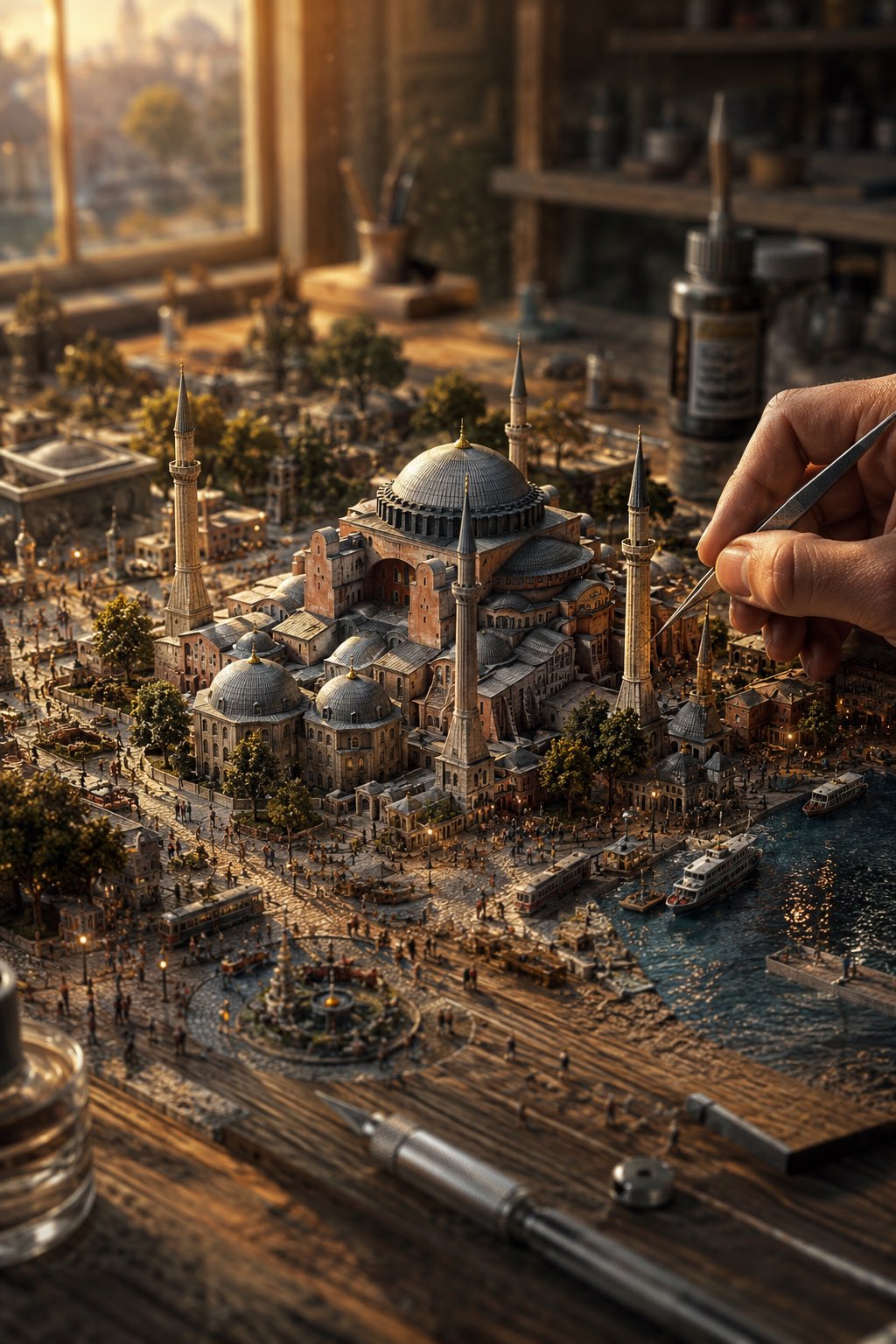
2张图片,为麦加和上海这样做,1080x1080,为巴黎这样做:<instruction> 1. 语义推理引擎(地图排版):输入A是一个主要城市名称(例如:上海、伦敦、迪拜)。分析该地点以生成3个整合资产:巨石体(缩写):提取输入A的字母。这些将作为主要的垂直结构。图标(天际线):识别该城市最具代表性的3–5座摩天楼、塔楼或纪念性建筑。基底(地图):识别具体地理形态(例如:弯曲河流、沿海港湾或半岛)。2. 容器(地形浮雕地图):目标:一个“活体地理品牌化”的3D微缩景观。底座:一块巨大、厚重的地形浮雕地图,放置在中性表面上。表面:地图呈现逼真材质:水域为浅蓝色反光环氧树脂,陆地为有纹理的插画纸质地图或卫星影像质感。边界:陆地区域分布着细小的低层城市蔓延体(greebling),环绕中央结构。3. 中央构图(混合天际线):排版:第1步中识别的字母被拉伸为巨大的哑光白色几何巨石体。它们作为城市中的“超高层”摩天楼。整合:真实地标(第1步)被真实地放置在巨大白色字母之间,遵循城市相对于水域的实际城市布局。融合:建筑与字母的地基必须看起来与地图地形物理融为一体。4. 叙事细节(尺度):微观生活:用符合比例精度的元素密集填充场景:水中的微型白色邮轮和快艇。一架单独的、微观商业飞机以低空飞越城市。罗盘玫瑰或导航标记散布在地图表面。氛围:4–6朵小型、3D蓬松白色棉花状云朵悬浮在中等高度,部分遮挡较高建筑。5. 光照与氛围:光照:高调棚拍日光。明亮、均匀照明,柔和阴影朝右上方投射以强调高度。视角:等距3/4高角度。捕捉海岸线的纵深和字母的垂直感。配色:以白色、浅蓝和中性灰为主,真实地标带来少量点缀色。输出:一张图片,1:1纵横比,3D建筑渲染,“SimCity”美学,8k分辨率。</instruction>
2 images, do this for Mecca and Shanghai, 1080x1080, Do this for Paris: <instruction> 1. The Semantic Inference Engine (Cartographic Typography): Input A is a Major City Name (e.g., Shanghai, London, Dubai). Analyze the location to generate 3 Integrated Assets: The Monoliths (The Abbreviation): Extract the letters of Input A. These will be the primary vertical structures. The Icons (The Skyline): Identify 3–5 of the city's most recognizable skyscrapers, towers, or monuments. The Substrate (The Map): Identify the specific geography (e.g., a curving river, a coastal harbor, or a peninsula). 2. Container (The Relief Map): Goal: A "Living Geographic Branding" 3D Diorama. The Base: A massive, thick topographic relief map resting on a neutral surface. The Surface: The map displays realistic textures: light blue reflective Epoxy Resin for the water and a textured, illustrated paper-map or satellite-image finish for the land. The Border: The land area is populated by tiny, low-rise urban sprawl (greebling) that surrounds the central structures. 3. The Central Composition (The Hybrid Skyline): The Typography: The letters identified in Step 1 are extruded into massive, Matte White Geometric Monoliths. They function as the "Super-Tall" skyscrapers of the city. The Integration: The real landmarks (Step 1) are placed realistically among the giant white letters, following the actual urban layout of the city relative to the water. The Merge: The foundations of the buildings and letters must look like they are physically part of the map's terrain. 4. The Narrative Detail (The Scale): Micro-Life: Densely populate the scene with scale-accuracy items: Tiny white cruise ships and speedboats in the water. A single, microscopic commercial airplane flying at low altitude over the city. Compass roses or navigation markers scattered on the map surface. The Atmosphere: 4–6 small, 3D Fluffy White Cotton-like Clouds float at mid-height, some partially obscuring the taller buildings. 5. Lighting & Atmosphere: Lighting: High-Key Studio Daylight. Bright, even illumination with soft shadows casting toward the top-right to emphasize height. Perspective: Isometric 3/4 High-Angle. Capturing the depth of the coastline and the verticality of the letters. Palette: Predominantly White, Light Blue, and Neutral Greys, with small pops of color from the real landmarks. Output: ONE image, 1:1 Aspect Ratio, 3D Architectural Render, "SimCity" aesthetic, 8k resolution. </instruction>